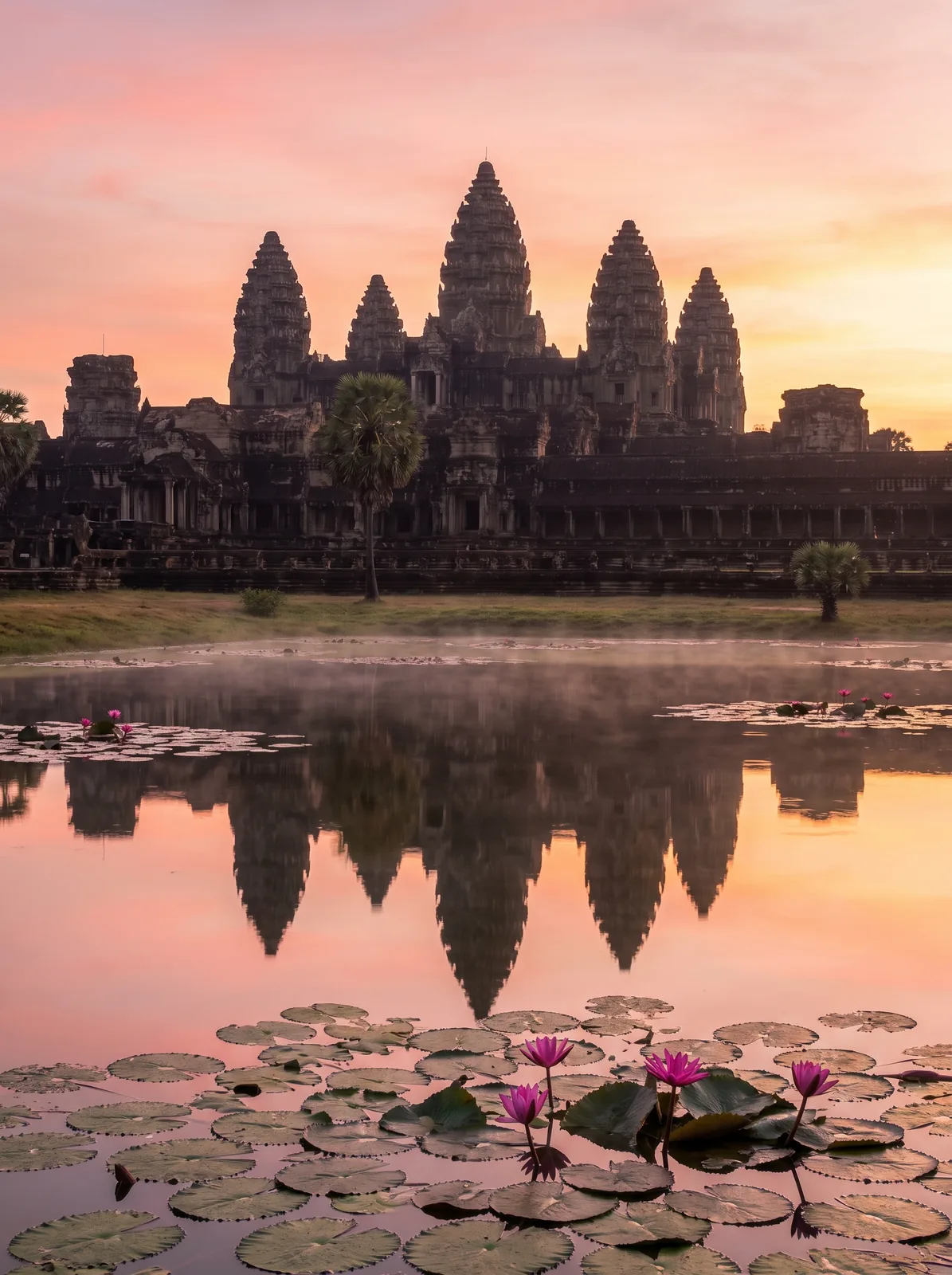
What your Cambodia trip changes
Siem Reap, Phnom Penh and the coast are lower risk than rural or forested-border travel and long overland trips. Where you go and the season shape what you need, so we start from your itinerary at your South London Clinic consultation.
The vaccines usually in the conversation
Hepatitis A and typhoid come up for most travellers because both spread through food and water; the NHS lists them among common recommendations for South-East Asia. Hepatitis B, Japanese encephalitis and rabies come in for longer, rural or repeated trips, plus a routine vaccine check.
Mosquitoes and malaria
Dengue is common in Cambodia and rises in the rainy season, spread by daytime-biting mosquitoes, so bite avoidance matters year-round. Malaria risk is limited to rural and forested border areas rather than Phnom Penh, Siem Reap or the main tourist route; the TravelHealthPro Cambodia advice sets out where, which we check. Japanese encephalitis is a consideration for longer rural stays.
Rabies
Rabies is present in Cambodia, so any bite, scratch or lick needs urgent care, and pre-travel doses are worth discussing for rural or long trips.
When to book
Six to eight weeks ahead where possible so any courses can be completed.
Common questions
Q: Do I need malaria tablets for Cambodia?
A: Only for rural and forested border areas, not Phnom Penh, Siem Reap or the main route. We check your itinerary.
Q: Which vaccines for Cambodia?
A: Hepatitis A and typhoid for most, with hepatitis B, Japanese encephalitis and rabies for longer or rural trips.
Q: Is dengue a risk?
A: Yes, so daytime bite protection matters.